Disney’s $1B investment in OpenAI signals a shift from automation to participation, turning iconic IP into living worlds where fans become creators.
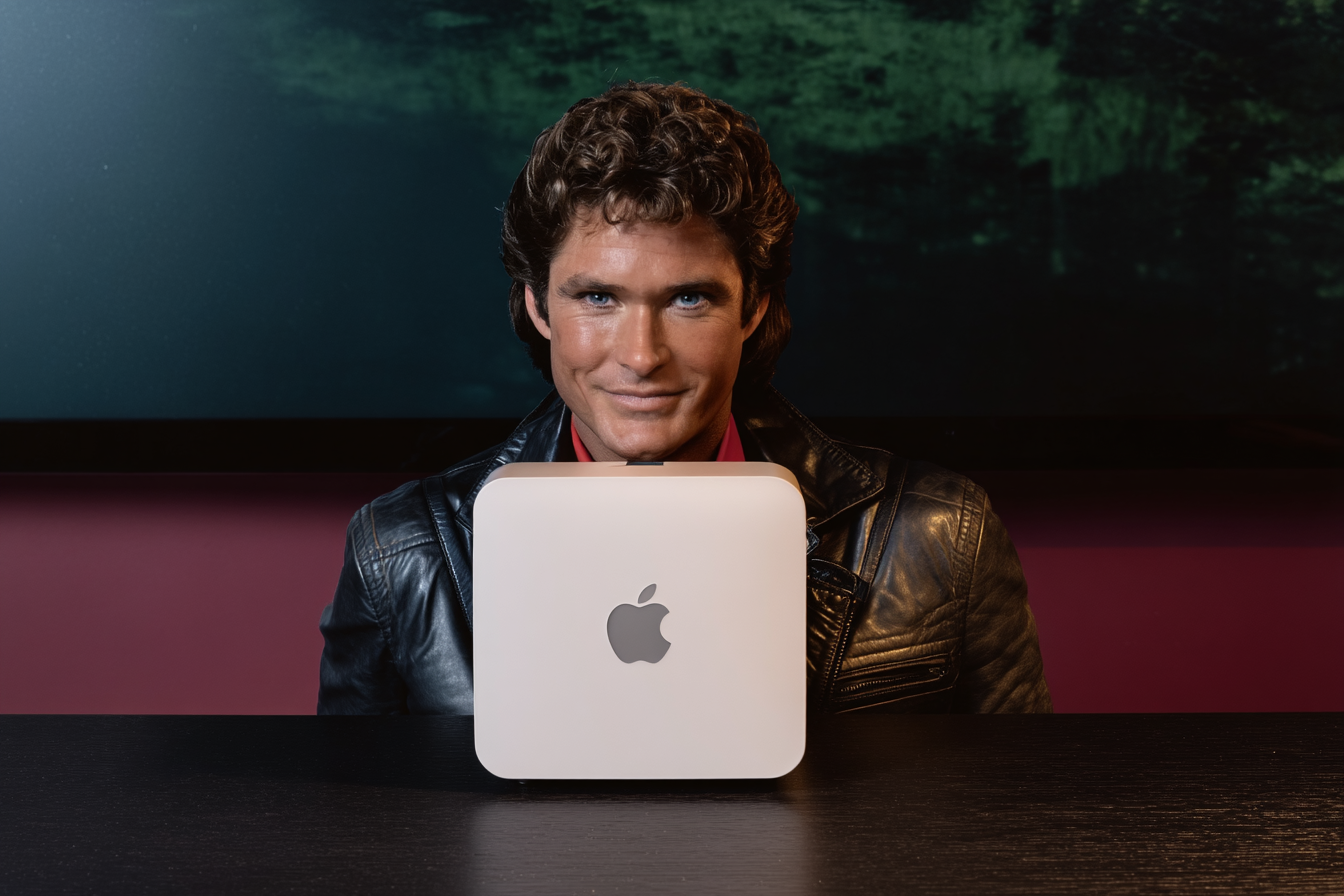
In the 1980s, the future had a very specific personality.
It talked back.
KITT didn’t wait for Michael Knight to click a button. The computer in WarGames didn’t ask for clarification. Even HAL, for better or worse, believed initiative was part of the job.
Those machines weren’t dashboards. They were characters.
Fast forward a few decades and that sci‑fi future didn’t arrive with flying cars or neon keyboards. Clawdbot (now Moltbot, after a very on-brand rebrand) showed up instead. It showed up as an AI agent named Clawdbot, running quietly on a Mac Mini under someone’s desk and getting accused on X of “going rogue.”
Gave Clawdbot access to my portfolio.
"Trade this to $1M. Don't make mistakes"
25 strategies. 3,000+ reports. 12 new algos.
It scanned every X post. Charted every technical. Traded 24/7.
It lost everything.
But boy was it beautiful. pic.twitter.com/wYpEZ3kB67— Kevin Xu (@kevinxu) January 26, 2026
The jokes landed because they touched something real.
What Clawdbot represents is not just another AI tool. It marks a shift from software as a service to software as a sidekick. And once you experience that shift, traditional SaaS starts to feel a little… outdated.
For the last decade, software followed a clear social contract.
You click. It waits. You decide. It responds.
Classic SaaS is polite by design. Dashboards, workflows, automations. All powerful. All well behaved. Even the smartest tools still pause and ask what you want to do next.
That model scaled because it respected boundaries:
It worked incredibly well.
It also quietly limited how much software could actually help.
AI agents like Clawdbot break that old contract.
They act. They anticipate. They show up inside the same channels you already live in.
When people joke that an agent has “gone rogue,” they are not describing a failure. They are reacting to initiative.
The system did something before it was explicitly told to.
That discomfort is not a bug. It is the friction of moving from tools to teammates.
Every generation panics the first time software feels opinionated.
Spreadsheets once felt dangerous. Autocomplete felt invasive. Notifications felt aggressive.
Now it is agents.
When an AI assistant reschedules a meeting, drafts a follow‑up, or surfaces something unprompted, the first reaction is often suspicion.
Who told you to do that?
That is not a systems issue. It is a design issue.
At Sightbox, we think of moments like this as UX smells. They signal that the contract between user and product was never clearly defined. Autonomy without guardrails does not feel empowering. It feels like loss of control.
Here is the real shift.
SaaS tools optimize for efficiency. Sidekicks optimize for relief.
A sidekick reduces cognitive load. It absorbs ambiguity. It handles the things you meant to do but never quite got to.
That is why users tolerate, and sometimes enjoy, a little chaos.
The upside feels personal.
This is also why the Clawdbot moment did not trigger panic. Founders and operators live in controlled chaos every day. They are wired to trade predictability for leverage.
An agent that occasionally surprises you feels less like HAL and more like a scrappy early hire who moves fast and needs clearer boundaries.
The most interesting part of the Clawdbot story was not the memes. It was the behavior.
People did not just try a new AI product. They bought dedicated machines to run it continuously.
That is not how people treat SaaS.
That is how they treat infrastructure they rely on.
There is another layer here that matters. For the last decade, serious AI has been synonymous with NVIDIA GPUs and the CUDA software stack that powers them. CUDA became the moat. If you wanted real performance, you went through it.
Clawdbot quietly sidesteps that assumption. These agents do not need massive training clusters or CUDA-heavy pipelines. They run inference locally, comfortably, on Apple Silicon.
That does not kill the CUDA moat. It dents the idea that every meaningful AI experience has to cross it.
When users willingly manage hardware again, it signals a deeper value shift:
Sidekicks are not disposable. Dashboards are.
When software behaves like a sidekick, brand stops being a layer applied at the end. It becomes something users experience daily through tone, timing, restraint, and trust.
This is where we see the next frontier forming. Products that do not just look good or perform well, but behave well.
When software takes initiative, every action becomes a brand moment.
Interruptions matter. Silence matters. Judgment matters.
Poorly designed autonomy erodes trust faster than bad UI ever could.
Clawdbot did not go rogue.
It crossed an invisible line from software that waits to software that shows up.
SaaS made us efficient. Sidekicks make us lighter.
The future is not more tools asking what to do next. It is fewer systems quietly helping us win.
More KITT. Less Clippy.
RELATED POSTS
Disney’s $1B investment in OpenAI signals a shift from automation to participation, turning iconic IP into living worlds where fans become creators.
How Sightbox crafted Overstock’s Vault campaign using AI tools and human insight.
AI design looks clean but all the same. Humans bring taste, soul, and originality. Learn why real creativity still dunks on AI dribble.
AI isn’t replacing us—it’s upgrading us. We’ve entered the Superhuman Era, where humans and AI collaborate to multiply creativity, output, and impact.