

The Seven Deadly Founder Sins
We’ve spent years sitting across the table from founders who just raised their first real round. Series A. Sometimes B. The check cleared. The press release went out. The LinkedIn post got its 200 likes.
And then, almost without exception, the same thing happens.
The founder looks around the room — at the team, at the product, at the pitch deck that got them here — and asks the question that changes everything:
Who are we now? And how do we tell that story at scale?
It’s the right question. It might be the most important question a funded company can ask. And almost every founder we’ve met gets the answer catastrophically wrong.
Not because they’re stupid. Not because they don’t care. Because they’re founders — which means they’ve spent their entire career solving problems by sheer force of will, and they assume this one works the same way.
It doesn’t.
The Pattern
Brand is not a problem you can brute-force. It’s not a feature you ship. It’s not a deck you finalize. It’s the one area of your company where effort without expertise doesn’t just fail — it actively makes things worse.
But founders don’t hear that. The ecosystem doesn’t tell them that. Instead, it tells them they’re visionaries. That they should “own the narrative.” That nobody knows the company better than they do.
All true. None of it relevant.
Knowing your company and knowing how to build a brand are two entirely different disciplines. And the gap between them is where startups go to waste millions of dollars and years of momentum on brand work that looks almost right but moves absolutely no one.
We’ve watched this happen so many times that the patterns have become liturgical. The same mistakes, in the same order, with the same consequences. Over and over.
So we decided to name them.
The Seven Sins
We call them The Seven Deadly Founder Sins — not because we’re passing judgment, but because we believe in diagnosis before cure. And you can’t fix a pattern you won’t name.
Each sin is a specific behavior we’ve seen destroy startup brands from the inside. Each one feels rational to the founder committing it. Each one is invisible until someone with enough distance and enough honesty names it out loud.
That’s what this series is.
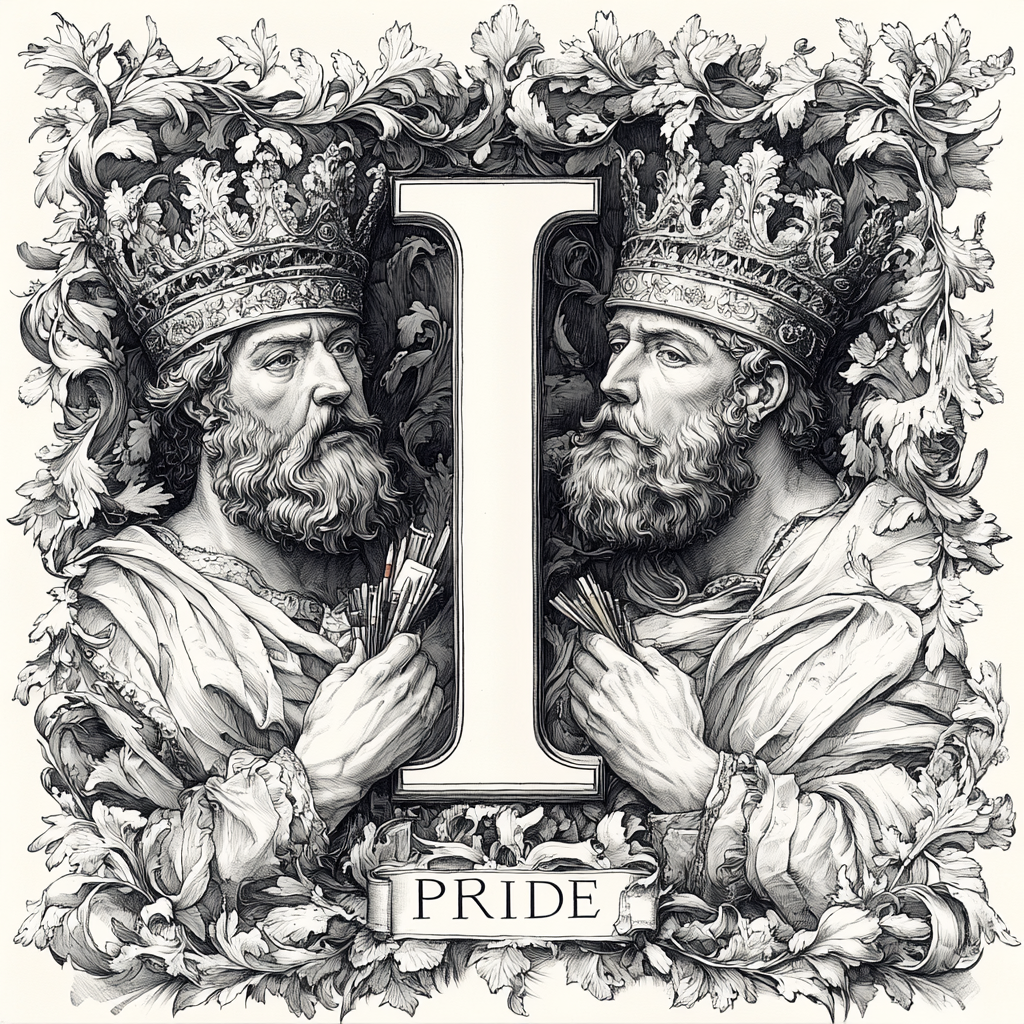
Ⅰ. Pride — “I could have done it myself.”
The belief that building the product qualifies you to build the brand.
Ⅱ. Sloth — “We’ll get to brand later.”
Treating narrative as a phase-two concern while the window for it closes.
Ⅲ. Envy — “Make it look like theirs.”
Copying what worked for others without understanding why it worked.
Ⅳ. Gluttony — “More is more.”
Over-hiring, over-tooling, over-scaling before the story is clear.
Ⅴ. Greed — “Growth at all costs.”
Optimizing metrics that degrade trust.
Ⅵ. Wrath — “Fire the agency.”
Blaming external partners for internal misalignment.
Ⅶ. Lust — “Chase the shiny thing.”
Pivoting brand every quarter based on trends.
If you’re a founder and none of these sound familiar, this series isn’t for you. Close the tab. No hard feelings.
But if even one of them made you flinch — just slightly, just privately — then keep reading. Because this series was written for exactly that flinch.
Why We’re Doing This
We’re Sightbox. We’re a brand and messaging agency that works almost exclusively with funded startups. We’ve been in this world long enough to know that most of the brand damage we see isn’t caused by bad agencies or bad designers. It’s caused by good founders making decisions that aren’t theirs to make.
We could keep that observation to ourselves. It would be safer. It would be more polite. It would be the smart business move.
But we operate on something we call the Ministry Mindset — a belief that if you see a pattern clearly enough to name it, you have an obligation to say it out loud. Not to sell something. Not to shame someone. But because clarity is the first step toward building something that actually works.
This series is an act of ministry, not marketing. We’re naming the sins because we’ve seen what they cost — and because the founders who are willing to hear it are the only ones worth working with anyway.
How This Works
Over the coming weeks, we’ll publish one essay for each sin. Each follows the same structure:
- Name the sin — precisely, unflinchingly
- Describe the behavior — so specifically you can’t pretend it’s about someone else
- Show what it costs — in the currency you actually care about
- Point to the virtue — the posture that replaces the sin
We’re starting with Pride. It’s the original sin for a reason — and if you’ve ever overridden your own team because you “had a strong point of view on brand,” you’ll know exactly why.
If any of this sounds familiar, we should talk. Not because we want to sell you something — but because the founders who feel seen by this work are exactly the ones we built Sightbox to serve.